Wednesday, October 24, 2012
The Convenience of Prewired Raceways
For our customers’ convenience, we provide several electrical options for our modular buildings. Our hollow raceways which form part of the framing for our modular walls can house all sorts of electrical components, such as phone and data lines, AV jacks, power outlets, light switches, and even power-saving motion sensors for lighting. Our raceways are easily accessible with removable covers in case of removals, installations, or maintenance.
We provide blank raceways in case our customers have their own projects in mind, and we also provide pre-wiring services for customer convenience. We can provide modular electrical systems for ease of use and prewired conduits and electrical boxes to house building electrical.
Our raceways are also UL approved. The Underwriters Laboratory is a certification organization that rigorously tests products for safety. UL approval is a coveted badge of confidence on electronic products, and our walls are UL approved. Such approval allows our customers to be sure of their quality, and most important of all, their safety.
So to give you an idea of the big picture and how convenient modular construction is, we’ll summarize the general process. You come to us with a project in mind and we work with you in designing the perfect building to fit your needs. We manufacture all of the components needed to build your building and then ship the components to your build site. Then all of the components are quickly and cleanly installed. The framing that holds the modular wall panels together are actually hollow raceways, where all sorts of electrical wiring can be added, such as power and data. Your modular building is installed on the spot and ready to go complete with lighting, wiring, and whatever else you need to carry out your business. A great way to do construction!

Tuesday, October 16, 2012
How Coffee Evolved Socially - A Spiritual Brew
 Did you know that coffee was considered sacred among the Muslim
Arab monks in Arabia. It's interesting to note that before the coffee
bean became a liquid java, the juices from the berry were turned into a
wine to be used during religious ceremonies. As time went on it was also
known as a substance used by heretics and because of this it was
quickly outlawed and prohibited by the Muslim community but that was
short lived.
Coffee has certainly gone through many phases of acceptance and rejection starting from when it was first discovered to its modern day form of being the most popular social beverage in the world. No one can expect or predict what people thought back in the 16th century but one fact I found interesting was that the Mormons in the days of Joseph Smith through one of his many revelations said that all "hot drinks are not for the belly" this was interpreted to forbid drinking coffee or tea. This is quite a stretch from today's thinking especially in the advent of all the healthy Gano coffee products that are being advertised today.
Further study tells us that many religions today forbid caffeinated drinks and other stimulants simply based on small studies as showing an association between certain ailments, heart diseases and caffeine.
 Coffee has
certainly come a long way since the 16th century. Coffee can be seen
in many social aspects in our modern day lifestyle. It has essentially
become a social lubricant in our society. The United States accounts for
25% of the coffee beans bought in the world and we have the largest
market for coffee consumption.
China is also a very large market as well. Popular today are coffee parties, it's a popular form of entertainment bringing people together, socializing and creating opportunities not normally found in mainstream everyday business.
Other aspects of our coffee culture are the introduction of new forms of healthy coffee. Ever since the Asians brought together the medicinal value of a certain mushroom called the ganoderma lucidum and began blending real Brazilian coffee beans and marketing them as a miracle potion for a healthy diet and the benefits of healthy Gano coffee products. Good, bad or indifferent this is just another contributing factor to the popularity of the coffee bean being used as a social and focal point for introducing the value of enjoying a flavorful blend of a low acidic coffee brew and turning a social event into money making opportunities for many who are on the healthy coffee kick.
Another example of our coffee culture are the popular cafés notably "STARBUCKS".
 Where
many customers gather for friendship, while enjoying their favorite
coffee blend, many people spend hours at these coffee shops.

Monday, October 15, 2012
Coffee - The Medical Elixir Of Life
 Coffee ranks top amongst the non-alcoholic beverage consumed by
the working class of people. Wirhtlin Worldwide, a market research
company has reported that, North Americans consume 1.8 cups of coffee
per day. While comparing this to water consumption statistics reveal
that 20% North Americans do not water at all while 42% consume 2 glasses
approximately. It is by far the one of the world's most admired and
loved beverages. There was a massive speculation widespread by the
medical community that coffee drinkers might suffer from the harming
attribute it possesses.
The healthcare community has done its fair share of examining the effects of consuming coffee, and a consequent array of health cautions and encouragements have been issued about its regular consumption. Recent health reports have shown that normal consumption of coffee decreases the risk of Parkinson's, diabetes, and even lowers the risk of having colon cancer as low as 25% and a an 80% drop in the risk of having liver cirrhosis. The antioxidants in coffee are found responsible in controlling the growth of these cells. In the year 2000 a study was conducted by the Hawaii researchers that surveyed around 8000 men found that coffee drinkers were five times less likely to be infected by Parkinson's disease.


 Type
2 diabetes, an insulin resistance, has been in headlines in various
health journals as a leading cause of fatty liver disease. Harvard
researchers carried out a research for 18 years analyzing 1, 26,000
people found that people who do involve in the favourite morning drink,
consuming one to three cups of coffee can reduce diabetes risk by
10%.While the consumers having six cups or more each day slashed men's
diabetes risk by 54% and women's by 30%.Coffe along with antioxidants
consists quinines that when injected to lab rats increased sensitivity.
Coffee also has huge amounts of chlorogenic acid and tocopherols and
magnesium.
According to a Harvard researcher regular coffee drinkers have about 1/3rd less asthma symptoms than those of non-coffee drinker's. People suffering from asthma reap the health benefits of drinking caffeinated coffee. Drinking caffeinated coffee during the situation of an emergency onset of asthma allows the patient to breathe easily. The Edinburgh Medical Journal, in Scotland, has evidences stating asthma and coffee are good for each other. The effectiveness is due to the similarities between caffeine and a tried-and-true asthma medication known as theophylline. The risk of asthma symptoms dropped by 28% when patients consumed three or more cups of coffee per day. Coffee contains natural antioxidants called 'flavonoids', are widely known as disease protectors. The benefits of moderate caffeine consumption that are recognized are; caffeine works on alertness, sensorial activity, mood, and memory.
As long as you have decided to proceed moderately with consciousness and you do not harbor another risk factor to prohibit coffee consumption, feel good about lifting your favorite cup of morning drink in support of your health.
The Coffee Countries of East Africa
 African coffees tend towards the exotic in flavors as compared to
the more well know Latin American coffees. These flavors include what's
described as fruity and floral with high acidity and medium body. Let's
review several of the more popular African coffee growing countries.
Kenya
The king of African coffees, washed Arabica Kenya coffee, is considered overall to be of the highest quality on the continent as a result of years and years of production, very high standards, superior milling facilities and coffee experts. Located on the east coast of Africa, Kenya's Mombasa port has been a natural focal point of commerce for ages. The famous Rift Valley of Central Kenya where most of the people live. A fertile land from the tropical coasts, semi-desert north and the savannahs in the south, Kenya's agricultural products, primarily tea and coffee, contribute to half of the country's exports.
The primary coffee growing regions are located around Mt. Kenya, just north of Nairobi, the country's capital. This region has two distinct rainy seasons; the first is April-June which results in what's called "fly crop" and the second is October-December with its increased rain produces the "main crop."
Characteristics include a high acidity, full body, intense floral and fruity flavors.
Growing regions include: Meru, Kirinyaga, Muranga, Nyeri, Embu and several others.
Ethiopia
By most accounts considered the birthplace of coffee, Ethiopia is located in northeast corner of Africa just north of Kenya, next to Somalia, Djibouti and Sudan. It is interesting to note that Ethiopia is the leading coffee consuming country in Africa, consuming almost half their annual production.
 Ethiopian coffee is a prized coffee for its
very unique flavors, most often a result of a combination of soil,
terrain, weather and often the natural drying process of the coffee
cherries in contrast to the washed processing of most Arabia coffees
considered high quality Specialty varieties.
Characteristics depending on the variety may include: balanced medium body and acidity with winey sweet or floral flavors and blueberry notes.
The most popular varieties in the United States are Harar, Yirgacheffe and Sidamo.
Tanzania
The mainland is primarily a savannah plateau lying east of the famous Rift Valley, Tanzania includes the island of Zanzibar. In the north lie Mount Kilimanjaro and the Serengeti National Park. With its tropical climate people are concentrated on the coastal region and in the north. Coffee is one of its main exports. Tanzania has several regions, north, south and west where coffee growing is found.
These Arabica coffees are mostly of the washed and fully washed varieties with the harvest season extending from April through December.
Characteristics include a balanced body with bright acidity and flavor. In the south we find more fruity flavors.
Popular varieties include Kilamanjaro, Makambako, Songea and Bukoa.
Burundi
This very small, but densely populated country borders Tanzania, Congo and Rwanda with a mountainous high plateau and tropical climate. A very poor country, most of its population survive through subsistence agriculture. Its coffee and tea earn 90% of its export dollars.
Primarily a washed Arabica variety, the harvest season extends from February through June.
 Characteristics
include a full body and bright acidity, typical of east African
coffees. A long way from the ocean, processed coffee must be transported
across land through Tanzania to the port of Dar es Salaam or through
Kenya to Mombasa.
Zambia
Like Burundi, Zambia is a landlocked country lying just north of Zimbabwe, but actually bordering seven countries in all. With its tropical climate and high savannah plateau, Zambia has a long rainy season which goes from November through May.
Although primarily an Agrarian country, its economy is dependent on mining Copper, but reserves are declining. As a result, the government is promoting agriculture and coffee production is increasing. The harvest season extends from October through March producing a full-bodied washed Arabica coffee with the general qualities of an average African variety.
Raising quality is a priority and government experimental farms are helping to improve growing, harvesting and production techniques that are being shared with the coffee growing community.
Malawi
Another landlocked coffee growing country located at the southern end of the famous Rift Valley between Zambia and Tanzania, Malawi produces a small but good quality washed Arabica coffee harvest.
 With a subtropical climate, its economy is
primarily agricultural with 90% of the population living in rural
communities. Although the country is a ward of the IMF and World Bank,
independent coffee, tea, sugar and tobacco farmers are producing the
main exports.
Coffee production is difficult as irrigation is required as a result of recent drought conditions and unpredictable rainfall. This situation restricts coffee production resulting in a small but quality coffee crop each year.
The washed Arabica beans are processed as fully washed coffee harvested from April through September producing a coffee of medium acidity and light body.
Author, Steve Josephs is CEO of Intellidon Marketing Solutions,
whose family office coffee service business, the Great American Coffee
Company, http://www.GourmetOfficeCoffee.com,
is a premier Specialty coffee roaster and office coffee service
provider in the Denver, Colorado metropolitan business community.
Copyright 2009 The Great American Coffee Company and Intellidon Marketing Solutions, Inc.
All rights reserved. Reprints are permissible when this Copyright statement and website link are included.
Sunday, October 14, 2012
What Makes a Good Coffee?

 When I was growing up, my Mom always prepared good rich coffee
early in the morning. My Dad, brother and I used to wake up to an aroma
that was pleasant and invigorating and you knew it was time to get up
to start the new day. I couldn't wait for the day to begin because I
knew the first order of the day was that great coffee that Mom use to
brew with a sock in the pot, wholesome milk and fresh ground coffee
beans... the old fashion way.
Sitting at the breakfast table waiting for my Dad to say the blessing, the piping steamy aroma of a good coffee permeated throughout the entire house. To this day I still carry on that tradition, except for the fact that I don't use the sock like MOM did. Technology has changed that. The one thing I remember was taking my toast and butter and dunking every bite in MOMS rich roasted coffee.


What's your favorite?
So what is the fuss about coffee being bad for you and how it races your heart rate and how pregnant women shouldn't drink it..
Historically coffee has been with us for a very long time, and I cannot think of one instance where coffee actually killed anybody, I'm sure there is a case or two somewhere on this earth, but has that affected consumption, not in the least.
It's still the 2nd largest liquid consumable, next to water, on this planet. Everyday there are new varieties and brands surfacing to gain the attention of our palate as well as our wallet.
Many of us still drink coffee and we're still walking. Variety has always been the spice of life and moderation has always been the answer to long life. So when it comes to taste the difference in coffee brews, beans, roasting methods, does make a difference. There is lightly roasted, medium and dark roasted, all of which produce different textures and aromas.

Certain coffees blended with these kinds of nutrients and antioxidants are not necessarily caffeine free but because they are brewed in such a way and roasted with quality beans the taste is as close to freshly brewed as you can get.
So what makes a good coffee, It is said that only the heart knows how to find what a good coffee is. Ralph J Ramirez , the coffee dude is an independent affiliate with Gano Excel and is involved with network marketing both on and off line. My mission is to introduce 5 simple steps for a great family lifestyle... Health, Wealth, Success, Community Service and Happiness.
For fast start ordering visit here.. http://ganocafetoday.blogspot.com/ Click the tab on top.... cafe 2.0 order your coffee here
Ralph J Ramirez, the coffee dude. My mission, 5 simple steps for a great family lifestyle.. Health, Wealth, Success, Community Service and Happiness. The key to success is:
1. make your first order and try it
2. Say as little as possible
3. To as many as possible
4. As quickly as possible
5. And put them in front of an effective presentation.
Love what you do..
Enjoy a cup of Gano today..
Barista, What Do You Know About Specialty Coffee From El Salvador?
 The barista looked back when he heard the question. He greeted
one of his regular patrons who enjoyed talking about coffee while
enjoying a cup or two of freshly brewed coffee. So, said the barista,
you want to know about El Salvador coffee, right? Well, first of all, I
have to say they do produce some very fine coffee in that tiny country.
100% shade grown in coffee plantations dispersed throughout the country
in very rich volcanic soils that add to the bean quality. Coffee
cultivation is an art in El Salvador. Families go back many generations
proudly looking after their coffee beans and plants.
The patron then asked: when did coffee cultivation start in El Salvador? The barista replied: before coffee, indigo was the main crop in the country growing at all altitudes. At first, coffee was cultivated for domestic use only early in the nineteenth century. By 1880, however, coffee had become virtually the sole Salvadoran export crop. Unlike Guatemala and Costa Rica, the Salvadoran coffee industry developed on its own in a very entrepreneurial way. Basically, the Salvadoran coffee industry did not receive external technical and financial help. Was this good, asked the patron? Yes, said the barista. This made Salvadoran coffee growers become one of the most efficient coffee producers in the world. Despite some government intervention over the years in the coffee trade practices, El Salvador remains at a very high level of coffee cultivation efficiency. The benefits of coffee production on Salvadoran society has been very important for road building, hospitals, community development, education, social services, ecological programs and much more.
 What about the Indian populations in the rural areas during
the coffee expansion? That's an interesting question, said the barista.
You see, unlike most Central American countries, El Salvador 's Indian
population integrated very well into the national economy. The country's
infrastructure development put Salvadorans from all regions more
directly in contact with one another and accelerated cultural
assimilation. For example, in the late 1980's, El Salvador did not have
an ethnically distinct Indian population. Throughout the colonial era
and prior to the twentieth century, the native communities of Pipil and
Lenca, located mainly in the western departments, accounted for about 60
per cent of the population. The development of coffee estates ended the
communal lands of native villages and incorporated the Indians into the
general cash economy. They became, in fact, peasants and wage laborers.
By the late nineteenth century, their assimilation was essentially
complete.
Does this mean the Indian cultures were lost forever, asked the patron? No, not really. Obviously, some loss in Indian heritage, language and custom took place which is very regrettable. However, Indian groups continue to maintain religious activities, distinctive women's dresses that are very colorful and beautiful, language, handicrafts, and other customs. The Pepil Indian group, for instance, has made a very effective push into the specialty coffee market through a large coffee cooperative they established for their sweet, nutty certified organic coffee branded "Café Pepil." The Indians have embraced the concept of cooperatives in order to strengthen their economic situations.
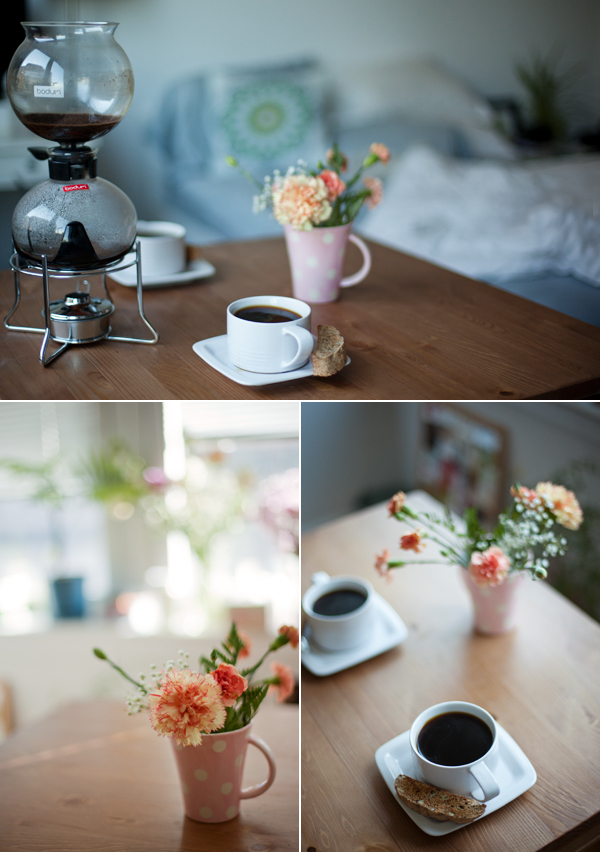 By focusing on specialty and gourmet coffees,
Salvadoran coffee growers benefit from growing market niches that pay
premium price for great coffee. Take for instance the Pacamara varietal.
As a coffee aficionado, I find this to be a fascinating hybrid. It is
superior in cup quality to either its parent varieties which is unusual.
As a coffee drinker, the large Pacamara bean is very interesting to
hold and observe. The Pacamara cup is soft and complex and the bean size
is always a conversation topic.
Barista, thank you for the interesting information you shared today with me about El Salvador. You are right: there is a whole lot of learning and opportunities in every cup. Drinking coffee is a great activity. May I please have a cup of freshly brewed Salvador High Grown Organic coffee? Aaah! This is great coffee indeed.

Saturday, October 13, 2012
PK Accommodation Ltd is one of the UK’s largest providers of cost-effective refurbished and used modular buildings, used cabins and portable accommodation for purchase or hire.
We can provide an extensive range of all types of refurbished and used portable buildings, used portable accommodation and used modular buildings including multi-storey or single storey modular buildings. We also keep in stock all types of used cabins of both standard, anti-vandal cabins and mobile construction for portable accommodation or as storage units.
All our refurbished and used modular buildings and used cabins are available for sale, hire or lease purchase. A full turnkey service is available and we offer a nation-wide service on all used modular buildings and used portable buildings.
If you’re looking to hire or purchase modular buildings or cabins; why not consider PK Accomodation’s range of used modular buildings and refurbished portable accommodation? Our used cabin buildings offer an environmentally friendly and lower cost alternative to purchasing a new building and have a range of other alternatives. See our Why Used? section for more information on the advantages of buying or hiring used modular buildings or used cabins.
Subscribe to:
Posts (Atom)